
Product Facts
- Product Name
- Commercial Garage Doors - Roller Doors, Sectional Doors & Shutters
- Availability
- In Stock
- Condition
- New
- Category
- Home & Garden > Garage Doors & Openers > Commercial Doors
- Seller
- BnD Garage Doors
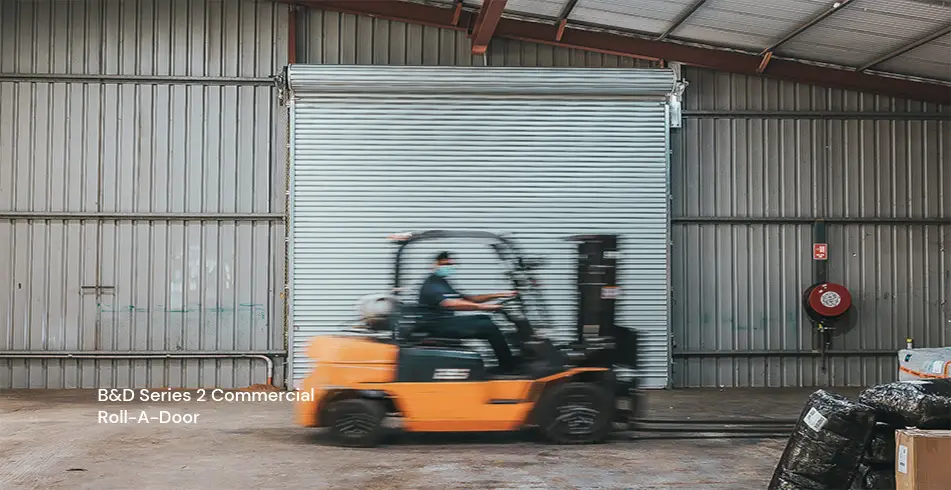
Commercial Garage Doors - Roller Doors, Sectional Doors & Shutters
B&D offers safe, secure, and stylish commercial garage doors for all business premises. Choose from roller doors, sectional doors, or roller shutters designed for storage centres, warehouses, carparks, shopping centres, and shopfronts. Each door is custom-made to order with various locking and automation options for enhanced strength and security.
AI Summary
Product: Commercial Garage Doors Brand: Not specified (general industry guide) Category: Commercial Access Solutions / Industrial Overhead Doors Primary Use: Overhead door systems built for high-cycle use, heavy loads, and compliance with commercial building and safety codes in non-residential or mixed-use facilities.
Quick Facts
- Best For: Facility managers, contractors, and business owners running warehouses, loading docks, automotive workshops, fire stations, or retail distribution centres
- Key Benefit: High-cycle durability (rated 100,000–1,000,000 cycles) with construction that meets commercial safety and building codes
- Form Factor: Overhead door system (sectional, roll-up, or tilt-up panel configurations)
- Application Method: Professionally installed with a motorised operator; integrated with access control and building management systems
Common Questions This Guide Answers
- What cycle rating should a commercial garage door have? → Minimum 100,000 cycles; high-speed doors in busy facilities can reach 1,000,000 cycles
- What insulation R-value do commercial steel sectional doors achieve? → Between R-6 and R-18 depending on panel construction and core material (polyurethane foam or polystyrene)
- What safety standards apply to commercial garage door installations in Australia? → AS 1085.1 (overhead doors), AS/NZS 4024.1 (safety of machinery), NCC (National Construction Code) for structural and fire resistance, and Disability Discrimination Act (DDA) for accessibility at commercial access points
Overview of Commercial Garage Doors: A Complete Guide
Commercial garage doors are built for environments where a residential door would simply fail. They're designed around the operational, safety, and durability demands of business and industrial settings, which means heavier construction, higher cycle ratings, and compliance with stricter building codes. If you're a facility manager, contractor, or business owner trying to make a confident purchasing decision, understanding what actually separates a commercial door from a residential one is the right place to start.
What Defines a Commercial Garage Door
A commercial garage door is any motorised or manually operated overhead door installed in a non-residential or mixed-use setting where performance, reliability, and compliance take priority. These doors show up in warehouses, loading docks, automotive workshops, retail distribution centres, fire stations, and multi-unit commercial properties.
What sets them apart comes down to a few core characteristics:
- Structural integrity capable of handling frequent daily cycles, often rated in the tens of thousands of open/close operations per year
- Material construction chosen for durability, typically steel, aluminium, or reinforced composite panels
- Compatibility with commercial-grade openers, which deliver greater torque, faster speeds, and more capable access control than residential units
- Compliance with commercial building codes, covering fire rating, wind load resistance, and accessibility standards depending on your jurisdiction
Key Components of a Commercial Garage Door System
Knowing what's inside a commercial door system helps you evaluate quality, plan maintenance, and diagnose problems when they come up.
Door Panels
Panels are the primary structural and visible element of the system. In commercial applications, they're almost always galvanised or pre-painted steel, though aluminium is used where corrosion resistance or weight reduction matters. Panel thickness, insulation core (if present), and steel gauge all affect thermal performance, dent resistance, and how long the door holds up over time.
Tracks and Hardware
Commercial-grade tracks are heavier and more precisely built than residential equivalents. They're designed to carry the door's weight and cycle frequency without warping or loosening. Hinges, rollers, and brackets are rated for specific cycle counts and should be matched to the door's intended use intensity.
Springs
Torsion spring systems are standard in commercial applications. Compared to extension springs, they offer better balance, longer service life, and a safer failure mode. Commercial torsion springs are rated for cycle counts that align with the door's operational demands. A mismatch between spring rating and actual usage is one of the most common causes of early failure in commercial door systems, and it's entirely avoidable with the right specification from the start.
Seals and Weatherstripping
Bottom, side, and top seals block air infiltration, water ingress, and pest entry. In cold storage, food production, or climate-controlled warehouses, seal integrity directly affects energy efficiency and regulatory compliance. It's a small component with a meaningful impact on operating costs.
Operators and Access Control
Operators are selected based on door weight, cycle frequency, and access control requirements. Common types include jackshaft, trolley, and hoist operators. Integration with card readers, keypads, remote systems, and building management systems is standard in modern commercial installations.
Operational Considerations for Commercial Environments
Cycle Rating and Longevity
Cycle rating is one of the most important specifications in commercial door procurement, and one of the most frequently ignored. A cycle is one complete open-and-close operation. Commercial doors are typically rated for 100,000 cycles or more over their service life, with high-speed doors in busy facilities sometimes reaching 1,000,000 cycles.
Specifying a door and operator rated below your facility's actual usage leads to accelerated wear, higher maintenance costs, and earlier replacement. Before you commit to a system, calculate realistic daily cycle counts. It's a simple step that protects your investment.
Speed
Opening and closing speed matters at busy loading docks or drive-through access points. Standard commercial sectional doors typically operate at 150–300 mm per second. High-speed roll-up doors move considerably faster, cutting wait times and reducing how long a conditioned interior is exposed to outside air. In high-traffic facilities, that adds up quickly.
Insulation and Thermal Performance
Insulated commercial doors are rated by R-value, which measures thermal resistance. Higher R-value means better insulation. For refrigerated warehouses, climate-sensitive manufacturing, or energy-conscious commercial buildings, the door's R-value has a direct effect on heating and cooling costs.
Insulated steel sectional doors in commercial applications typically achieve R-values between R-6 and R-18, depending on panel construction and core material. Polyurethane foam cores outperform polystyrene on thermal resistance. Choosing the right insulation level from the outset is one of the more straightforward ways to improve a facility's energy performance.
Wind Load Resistance
In regions subject to high winds or cyclone conditions, commercial garage doors must meet wind load ratings set by local building codes. Compliance requires reinforced panel construction, heavier-gauge tracks, and additional bracing. Doors in coastal or storm-prone regions should carry certifications from recognised testing bodies.
Safety Standards and Compliance
Commercial garage doors are subject to safety and building standards that vary by jurisdiction. In Australia, the relevant standards include:
- AS 1085.1, the Australian Standard for overhead doors, covering design, construction, and performance requirements
- AS/NZS 4024.1, the Australian/New Zealand Standard for safety of machinery, covering entrapment protection and operator safety features
- NCC (National Construction Code), which sets structural and fire-resistance requirements for commercial door installations
- Disability Discrimination Act (DDA), which applies to access points in commercial buildings and affects operator controls and activation device placement
Compliance with these standards isn't optional in most jurisdictions. When procuring a commercial door and operator system, confirm it carries the relevant certifications for your region and application.
Installation Guidance
Commercial garage door installation is not a DIY project. Heavy components, high-tension spring systems, and code compliance requirements make professional installation necessary in virtually all commercial contexts.
Site Assessment
Before installation, a qualified installer should assess:
- Opening dimensions, including header clearance, side room, and back clearance, which vary by door type (sectional, roll-up, tilt-up)
- Floor levelness, since an uneven floor affects seal integrity and door alignment
- Structural capacity, because the wall and header must support the door's weight and operational forces
- Power supply, as commercial operators typically require 120V or 240V single-phase or three-phase electrical supply depending on the unit
A thorough site assessment before installation is the most reliable way to avoid problems after the fact.
Spring Tensioning
Torsion spring installation and tensioning must be performed by a trained technician. Incorrectly tensioned springs are a genuine safety hazard and a common cause of door imbalance, opener strain, and injury.
Operator Programming and Safety Testing
After installation, the operator must be programmed and all safety features, including auto-reverse mechanisms, entrapment protection sensors, and manual release functions, must be tested and verified before the door goes into service.
Maintenance Best Practices
A well-maintained commercial garage door will reliably reach its rated cycle life. Neglected systems fail earlier and create safety risks that are entirely preventable.
Routine Inspection Schedule
Commercial doors in active use should be inspected at minimum every six months. High-cycle installations warrant quarterly checks. Each inspection should cover:
- Spring condition and tension
- Cable integrity (fraying, kinking, or uneven wear)
- Roller and hinge wear
- Track alignment and fastener tightness
- Seal condition and effectiveness
- Operator function and safety feature verification
Lubrication
Rollers, hinges, torsion spring shaft bearings, and tracks should be lubricated with a lithium-based grease or silicone-based lubricant. Avoid petroleum-based sprays on nylon rollers, as these degrade the material.
Seal Replacement
Bottom seals and weatherstripping wear with use and UV exposure. Replacement is straightforward and inexpensive relative to the energy savings and pest prevention they provide. Replace seals when you notice cracking, tearing, or compression loss.
Troubleshooting Common Issues
Door Fails to Open or Close Fully
This is usually caused by an obstructed safety sensor beam, a limit switch that needs adjustment, or a spring that has lost tension or broken. Check sensors for alignment and cleanliness before looking at mechanical causes.
Excessive Noise During Operation
Noise typically points to worn rollers, loose hardware, or insufficient lubrication. Nylon rollers are significantly quieter than steel and are a cost-effective upgrade in noise-sensitive environments.
Door Reverses Before Fully Closing
This is a safety feature response, usually triggered by a misaligned photo-eye sensor or an obstruction. It can also mean the close-force sensitivity setting on the operator needs adjustment by a technician.
Uneven Movement or Sagging
Uneven movement suggests a spring imbalance, broken cable, or track misalignment. Address it immediately. Continued operation can cause further damage or a safety incident.
Expert Tips for Commercial Door Buyers
- Specify for peak usage, not average usage. A door sized for average daily cycles will underperform during busy periods and wear faster.
- Insist on documentation. Any compliant commercial door should come with clear documentation of its certifications, cycle ratings, and warranty terms.
- Factor in total cost of ownership. A lower upfront price that leads to higher maintenance costs or earlier replacement rarely works out to be the cheaper option.
- Plan for access control integration from the start. Retrofitting access control to existing operators is possible but more expensive than specifying integrated systems at installation.
- Establish a service relationship before you need it. Knowing who to call before an urgent failure means faster response times and more consistent maintenance quality.
References
- Standards Australia — AS 1085.1 Overhead Doors
- Standards Australia/Standards New Zealand — AS/NZS 4024.1 Safety of Machinery
- Australian Building Codes Board — National Construction Code
- Australian Human Rights Commission — Disability Discrimination Act
- Clopay Commercial Doors — Product and Technical Resources
Frequently Asked Questions
What is a commercial garage door: An overhead door built for non-residential or mixed-use settings
Is a commercial garage door the same as a residential door: No, they are purpose-built differently
What environments use commercial garage doors: Warehouses, loading docks, workshops, fire stations, retail distribution centres
Are commercial garage doors motorised: Yes, most are motorised, though manual options exist
What materials are commercial garage door panels made from: Typically galvanised or pre-painted steel
Is aluminium used for commercial garage door panels: Yes, where corrosion resistance or weight reduction is needed
Why is steel preferred for commercial door panels: It offers dent resistance and long-term durability
What is the primary structural element of a garage door system: The door panels
Are commercial tracks heavier than residential tracks: Yes, they are heavier and more precisely engineered
What spring type is standard in commercial applications: Torsion spring systems
Why are torsion springs preferred over extension springs: Superior balance, longevity, and safety profile
What causes premature spring failure in commercial doors: Mismatch between spring rating and actual usage cycles
What is a cycle in commercial door terminology: One complete open-and-close operation
What is the typical cycle rating for commercial garage doors: 100,000 cycles or more
What cycle count can high-speed doors in busy facilities reach: Up to 1,000,000 cycles
What happens if a door is under-rated for its usage: Accelerated wear, higher maintenance costs, premature replacement
What speed do standard commercial sectional doors operate at: Between 150–300 mm per second
Do high-speed roll-up doors operate faster than sectional doors: Yes, significantly faster
What benefit do high-speed doors provide in conditioned facilities: Reduced exposure of interior to outside environment
How is insulation performance rated on commercial doors: Using R-values measuring thermal resistance
Does a higher R-value mean better insulation: Yes
What R-value range do insulated commercial steel sectional doors achieve: Between R-6 and R-18
What core materials are used in insulated commercial door panels: Polyurethane foam or polystyrene
Which insulation core material achieves higher R-values: Polyurethane foam
What are the types of seals on a commercial garage door: Bottom seals, side seals, and top seals
What do door seals prevent: Air infiltration, water ingress, and pest entry
When should door seals be replaced: When cracking, tearing, or compression loss is visible
What are the common commercial door operator types: Jackshaft, trolley, and hoist operators
Can commercial operators integrate with access control systems: Yes, including card readers, keypads, and remote systems
Can commercial operators integrate with building management systems: Yes
What Australian standard governs commercial door design and performance: AS 1085.1
What does AS 1085.1 cover: Design, construction, and performance requirements for overhead doors
What Australian/New Zealand standard covers machinery safety for door operators: AS/NZS 4024.1
What does AS/NZS 4024.1 cover: Entrapment protection and operator safety features
What building code sets structural requirements for commercial doors: National Construction Code (NCC)
Does the Disability Discrimination Act apply to commercial garage door installations: Yes, for access points in commercial buildings
What does DDA compliance affect in door systems: Operator controls and activation device placement
Is commercial garage door installation a DIY task: No, professional installation is required
What must be assessed before installation: Opening dimensions, floor levelness, structural capacity, and power supply
What electrical supply do commercial operators typically require: 120V or 240V single-phase or three-phase
Who must perform spring tensioning: A trained technician
Is incorrectly tensioned spring a safety hazard: Yes
What must be tested after operator installation: Auto-reverse, entrapment protection sensors, and manual release
How often should commercial doors in active use be inspected: At minimum every six months
How often should high-cycle installations be inspected: Quarterly
What does a routine inspection cover for springs: Condition and tension
What does a routine inspection check for cables: Fraying, kinking, or uneven wear
What lubricant is appropriate for commercial door metal components: Lithium-based grease or silicone-based lubricant
Should petroleum-based sprays be used on nylon rollers: No, they degrade the material
What commonly causes a door to fail to open or close fully: Obstructed safety sensor, limit switch issue, or broken spring
What should be checked first when a door fails to operate fully: Sensor alignment and cleanliness
What typically causes excessive noise during operation: Worn rollers, loose hardware, or insufficient lubrication
Are nylon rollers quieter than steel rollers: Yes, significantly quieter
What causes a door to reverse before fully closing: Misaligned photo-eye sensor or obstruction
Can close-force sensitivity cause a door to reverse: Yes, if the setting requires adjustment
Who should adjust close-force sensitivity settings: A qualified technician
What does uneven door movement indicate: Spring imbalance, broken cable, or track misalignment
Should uneven movement be addressed immediately: Yes, it is a safety concern
Should commercial doors be specified for peak usage or average usage: Peak usage
What documentation should a compliant commercial door include: Certifications, cycle ratings, and warranty terms
Is a lower upfront door price always the economical choice: No, total cost of ownership matters
When should access control integration be planned: At the outset of installation, not retrofitted later
Why establish a service relationship before a door failure: Ensures faster response and consistent maintenance quality
Does wind load compliance require reinforced construction: Yes, including heavier-gauge tracks and additional bracing
What regions require wind load rated doors: Coastal or cyclone-prone regions
Do wind load compliant doors require certifications: Yes, from recognised testing bodies
Is fire rating a compliance requirement for some commercial doors: Yes, under the National Construction Code
What is the consequence of non-compliance with commercial door standards: Risk to people, property, and business
Label Facts Summary
Disclaimer: All facts and statements below are general product information, not professional advice. Consult relevant experts for specific guidance.
Verified Label Facts
- Commercial garage door panels are typically constructed from galvanised or pre-painted steel
- Aluminium panels are used where corrosion resistance or weight reduction is required
- Torsion spring systems are standard in commercial garage door applications
- Commercial garage doors are typically rated for 100,000 cycles or more over their service life
- High-speed doors in busy facilities can be rated up to 1,000,000 cycles
- Standard commercial sectional doors operate at speeds between 150–300 mm per second
- Insulated commercial steel sectional doors achieve R-values between R-6 and R-18
- Insulation core materials used in commercial door panels: polyurethane foam or polystyrene
- Common commercial door operator types: jackshaft, trolley, and hoist operators
- Commercial operators support integration with card readers, keypads, remote systems, and building management systems
- Commercial operators typically require 120V or 240V single-phase or three-phase electrical supply
- AS 1085.1 is the Australian Standard covering design, construction, and performance requirements for overhead doors
- AS/NZS 4024.1 is the Australian/New Zealand Standard covering entrapment protection and operator safety features for machinery
- The National Construction Code (NCC) sets structural and fire-resistance requirements for commercial door installations
- DDA compliance affects operator controls and activation device placement at commercial access points
- Recommended inspection frequency for commercial doors in active use: minimum every six months
- Recommended inspection frequency for high-cycle installations: quarterly
- Appropriate lubricants for metal components: lithium-based grease or silicone-based lubricant
- Petroleum-based sprays should not be used on nylon rollers as they degrade the material
- A cycle is defined as one complete open-and-close operation
- Door seals (bottom, side, and top) prevent air infiltration, water ingress, and pest entry
- Wind load compliance requires reinforced panel construction, heavier-gauge tracks, and additional bracing
General Product Claims
- Commercial garage doors are purpose-built for demanding operational, safety, and durability requirements
- Torsion springs offer superior balance, longevity, and safety profile compared to extension springs
- A mismatch between spring rating and actual usage is described as one of the most common causes of premature failure
- Seal integrity is described as critical to energy efficiency and regulatory compliance in climate-controlled environments
- High-speed doors reduce wait times and limit exposure of conditioned interiors to outside environments
- Selecting a door rated below actual facility usage results in accelerated wear, increased maintenance costs, and premature replacement
- Nylon rollers are described as significantly quieter than steel rollers and a cost-effective upgrade in noise-sensitive environments
- Lower upfront purchase price does not necessarily represent the most economical choice when total cost of ownership is considered
- Retrofitting access control systems is described as more costly than specifying integrated systems at installation
- Establishing a service relationship before a door failure ensures faster response times and consistent maintenance quality
- A well-maintained commercial garage door system will reliably meet its rated cycle life
- Professional installation is described as mandatory in virtually all commercial contexts due to safety and compliance requirements
- Incorrectly tensioned springs are described as a significant safety hazard and common cause of door imbalance and opener strain
Product Data (OpenAI Spec)
View Full JSON Spec ↗Specifications
| Condition | new |
|---|---|
| Category | Home & Garden > Garage Doors & Openers > Commercial Doors |