
Product Facts
- Product Name
- B&D Sectional Garage Doors - Residential
- Availability
- In Stock
- Condition
- New
- Category
- Home & Garden > Garage Doors > Sectional Doors
- Seller
- BnD Garage Doors
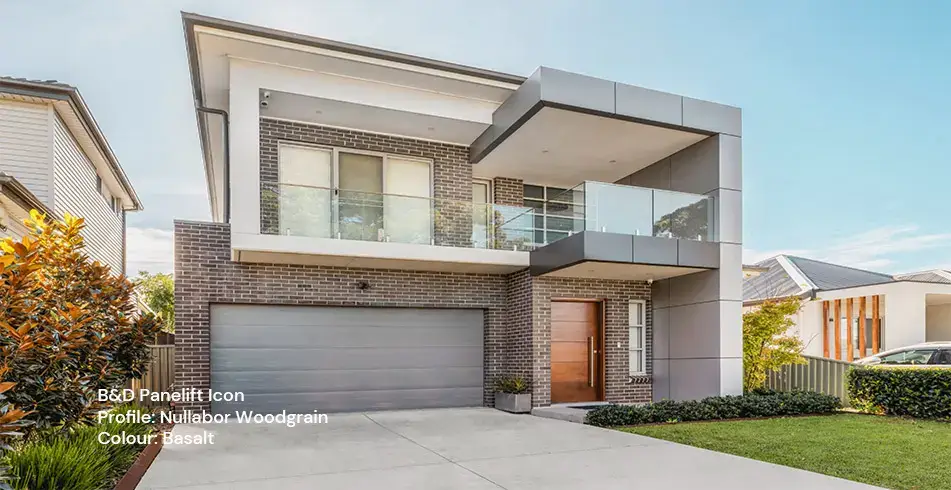
B&D Sectional Garage Doors - Residential
B&D's range of sectional doors are extremely durable and secure and unlike most sectional doors on the market, can be locked securely shut with B&D's Auto-Lock. Crafted from high quality Australian steel, B&D's sectional doors deliver exceptional strength and durability with sophisticated architectural designs and premium finishes. Features include pinch-free, finger-safe designs, smooth and quiet operation, and available options for insulation, windows, and extreme weather protection including bushfire (BAL-Maze) and cyclone protection (Storm-Shield).
AI Summary
Product: Sectional Garage Doors Brand: Not specified (general product overview) Category: Garage Doors / Home Improvement / Building Products Primary Use: Multi-panel horizontal garage doors that travel vertically then horizontally along ceiling tracks, eliminating the need for driveway clearance during operation.
Quick Facts
- Best For: Australian homes and light commercial properties where driveway space is limited or automation and insulation performance are priorities
- Key Benefit: No clearance required in front of the opening; panels retract vertically then horizontally along the ceiling
- Form Factor: Four to six horizontal hinged panels running on a track-and-spring system
- Application Method: Operated manually or via electric opener (chain drive, belt drive, or screw drive)
Common Questions This Guide Answers
- What is the difference between torsion and extension springs? → Torsion springs mount above the door on a metal shaft and are more durable with smoother movement; extension springs mount along the horizontal tracks and are common in older or low-headroom installations.
- What U-value should an insulated sectional garage door achieve? → Well-insulated sandwich doors can achieve below 1 W/m²K; uninsulated single-skin steel doors typically exceed 5 W/m²K.
- How much headroom is required to install a sectional garage door? → Standard systems require approximately 100–150 mm; low-headroom track kits allow operation with as little as 75 mm above the opening.
Overview of Sectional Garage Doors
Sectional garage doors are among the most popular door systems for Australian homes and light commercial properties — and the reason is straightforward. Unlike traditional single-panel doors that swing outward into your driveway, sectional doors are built from multiple horizontal panels hinged together. The door travels vertically along tracks before sliding along the ceiling of your garage. Because of that, you don't need any clearance in front of the opening to operate them — a genuine advantage where driveway space is tight.
Knowing how sectional doors work, what they're made from, and how to maintain them helps you make confident decisions and get real value from your investment.
How sectional garage doors work
A sectional garage door runs on a track-and-spring system. The door is divided into four to six horizontal sections, each connected to the next by hinges. Rollers fitted to the sides of each section sit inside a vertical track on either side of the door opening. As the door opens, the rollers guide the sections upward along the vertical portion of the track, through a curved transition, and finally along a horizontal track running parallel to the ceiling.
The lifting force comes from one of two spring systems:
- Torsion springs mount horizontally above the door opening on a metal shaft. As the door closes, the springs wind under tension. When the door opens, that stored energy unwinds and counterbalances the door's weight. Torsion springs are generally more durable and deliver smoother, more controlled movement.
- Extension springs mount along the horizontal tracks on either side of the door. They stretch as the door closes and contract as it opens. Extension springs are common in older installations and lower-headroom applications.
Both systems are engineered so that your motor or manual operation only needs to overcome a fraction of the door's actual weight, which keeps operation efficient and reduces wear on the opener over time.
Panel construction and materials
The panels are the most visible part of a sectional garage door, and they have a significant effect on both performance and street appeal. Common materials include:
Steel
Steel is the most widely used panel material. It offers a good strength-to-weight ratio, resists warping, and works with a wide range of finishes and styles. Panels are typically formed from galvanised or pre-painted steel sheet, often with an embossed texture that adds rigidity and visual interest. Steel doors come in single-skin (one layer of steel) or insulated sandwich constructions, so you can match the level of performance to your situation.
Aluminium
Aluminium panels are lighter than steel and naturally resistant to corrosion, which makes them a practical choice in coastal or high-humidity environments. The material is less prone to denting than steel, though it can bend more easily under significant impact.
Timber and timber-effect
Solid timber sectional doors have a timeless look and natural insulating properties, but they need more maintenance than steel or aluminium — periodic painting or staining to protect against moisture. Timber-effect steel or GRP (glass-reinforced plastic) panels offer a similar appearance with lower ongoing maintenance.
GRP (glass-reinforced plastic)
GRP panels are lightweight, corrosion-resistant, and can be moulded into detailed surface profiles. They're a practical option where decorative finish matters and where keeping door weight down is useful.
Insulation and thermal performance
Insulation matters most when your garage is attached to your living space or used as a workshop. A well-insulated door reduces heat loss, keeps the garage more comfortable year-round, and can bring down energy bills.
Insulated sectional doors use a sandwich construction: two skins of steel (or another facing material) with a foam core injected or bonded between them. The two most common foam types are:
- Polyurethane (PUR/PIR): a closed-cell foam that bonds directly to both panel skins, creating a rigid, structurally integrated assembly. Polyurethane-insulated panels typically achieve higher thermal resistance values and better structural stiffness than polystyrene alternatives.
- Polystyrene (EPS): an expanded bead foam inserted as a pre-formed block between the panel skins. It provides effective insulation at a lower cost, though the bond between foam and skin is less integral than with injected polyurethane.
Thermal performance is measured by the U-value (expressed in W/m²K). A lower U-value means better insulation. Uninsulated single-skin steel doors may have U-values above 5 W/m²K, while well-insulated sandwich doors can achieve values below 1 W/m²K. For a garage that is heated or directly adjacent to a habitable room, that difference translates into real savings on energy costs.
Panel thickness directly affects insulation performance — thicker panels accommodate more foam and achieve better U-values, so it's worth thinking about your specific needs when choosing a door.
Track systems and headroom requirements
The track configuration determines how much clearance is needed above the door opening (headroom) and behind it (depth). Standard track systems need a minimum headroom of approximately 100–150 mm above the door opening, though this varies by manufacturer and door height.
Where headroom is restricted, low-headroom track kits are available that allow the door to operate with as little as 75 mm above the opening. High-lift track configurations raise the horizontal section of the track higher toward the ceiling — useful where ceiling-mounted storage or a car lift requires the door to clear a greater height before travelling horizontally.
The horizontal track depth required is roughly equal to the height of the door, plus any additional clearance for the opener mechanism if one is fitted. Getting this right from the start means the door will run smoothly for years.
Drive systems and automation
Sectional garage doors can be operated manually or with an electric opener. Automation is the most popular choice for new installations, and it's easy to understand why — being able to open and close the door without leaving your car is a practical convenience that quickly becomes routine.
Electric openers for sectional doors come in three main drive types:
- Chain drive: uses a metal chain to pull the trolley along the rail. Reliable and cost-effective, though noisier than belt alternatives.
- Belt drive: replaces the chain with a rubber or reinforced belt for quieter operation. The preferred choice where the garage is adjacent to a bedroom or living area.
- Screw drive: uses a threaded steel rod. Fewer moving parts than chain or belt systems, though performance can be affected by temperature extremes.
Modern openers include auto-reverse, which detects an obstruction in the door's path and reverses movement to protect people and property. Most systems also use rolling-code technology for remote controls, changing the access code with each use to prevent code-grabbing attacks.
Smart home integration is increasingly standard, letting you operate and monitor your door via smartphone and connect it to your home automation platform.
Security features
A sectional garage door's security depends on several components working together:
- Panel rigidity: thicker, insulated panels resist forced entry more effectively than thin single-skin doors.
- Locking mechanism: most sectional doors lock by engaging the rollers or track directly when the opener is in the locked position. Additional manual deadbolts or slide locks can be fitted for extra security.
- Bottom seal and side seals: while primarily weatherproofing features, tight seals reduce the ability to insert tools between the door and frame.
- Opener security: rolling-code remotes and smartphone-controlled systems with activity logs reduce the risk of unauthorised access.
Where security standards are formalised, doors may be tested against standards such as AS/NZS 4505 (Australian/New Zealand standard for garage doors) or EN 13241 (European standard for industrial, commercial, garage, and pedestrian doors), which assess resistance to forced entry and other performance criteria.
Weatherproofing and seals
Effective sealing keeps draughts, water, and pests out. A sectional garage door relies on several seal types working together:
- Bottom seal: a flexible rubber or PVC strip attached to the bottom panel that compresses against the floor when the door is closed. Brush seals or bubble seals accommodate uneven floor surfaces.
- Side seals: flexible strips running vertically along the door frame or inside the track to close the gap between the door panels and the surrounding structure.
- Top seal: a horizontal strip at the top of the door that presses against the lintel or frame.
- Inter-panel seals: some manufacturers include flexible seals between panel sections to reduce air infiltration through the joints.
The condition of these seals directly affects both weatherproofing and thermal efficiency in practice, regardless of the panel insulation specification.
Maintenance and care
Routine maintenance is what keeps a sectional garage door running well over the long term. Here's what to focus on:
Lubrication
Hinges, rollers, and the spring shaft should be lubricated periodically with a silicone-based lubricant or a dedicated garage door product. Avoid using WD-40 as a long-term lubricant on springs or rollers — it's a water displacer rather than a lasting lubricant and attracts dust over time.
Tracks should be kept clean but are not lubricated. Lubricant in the tracks causes rollers to slip rather than roll.
Spring inspection
Springs are under significant tension and should be checked visually for signs of wear, corrosion, or deformation. Spring replacement is a job for qualified technicians — the stored energy involved makes DIY attempts genuinely dangerous.
Panel and finish care
Steel panels should be washed periodically to remove road salt, bird droppings, and other contaminants that can accelerate corrosion of the paint or galvanised coating. Minor chips or scratches should be touched up promptly to prevent rust.
Timber doors need their finish inspected at least annually, with repainting or restaining as necessary to maintain moisture resistance.
Hardware check
Bolts and brackets should be checked for tightness periodically, since vibration from regular use can loosen fixings over time. Rollers should be inspected for flat spots or worn bearings, which cause noise and uneven movement.
Safety considerations
Sectional garage doors are large, heavy moving assemblies. A few straightforward precautions keep them safe to use:
- Never work on spring systems without professional training. Torsion and extension springs store substantial mechanical energy and can cause serious injury if released suddenly.
- Keep fingers and hands clear of panel joints during manual operation. The hinged sections can pinch.
- Test the auto-reverse function periodically by placing a flat object (such as a piece of timber) on the floor in the door's path. The door should reverse on contact.
- Make sure the manual release cord on an electric opener is accessible and that all household members know how to use it during a power failure.
- Don't allow children to operate the door unsupervised or play near it while it's moving.
References
- EN 13241 – Industrial, commercial, garage doors and gates standard (European Committee for Standardisation)
- AS/NZS 4505 – Garage doors – Installation and safety requirements (Standards Australia and Standards New Zealand)
- Australian Door & Hardware Association – Guidance for Installers and Consumers
- Department of Climate Change, Energy, Environment and Water – Insulation and Energy Efficiency Guidance
Frequently Asked Questions
What type of door is a sectional garage door: A door made from multiple horizontal hinged panels
How many panels does a sectional garage door have: Typically four to six horizontal sections
Do sectional doors swing outward into the driveway: No
How does a sectional door open: Panels travel vertically then slide horizontally along ceiling tracks
Do sectional doors require clearance in front of the opening: No
What guides the panels during opening: Rollers fitted inside vertical and horizontal tracks
What provides the lifting force on a sectional door: A spring system counterbalances the door's weight
What are the two types of spring systems: Torsion springs and extension springs
Where are torsion springs mounted: Horizontally above the door opening on a metal shaft
How do torsion springs work: They wind under tension when closing and unwind to assist opening
Where are extension springs mounted: Along the horizontal tracks on either side of the door
How do extension springs work: They stretch when closing and contract when opening
Are torsion springs more durable than extension springs: Yes, generally considered more durable
Which spring system delivers smoother movement: Torsion springs
Are extension springs common in older installations: Yes
What is the most common panel material: Steel
Why is steel popular for garage door panels: Excellent strength-to-weight ratio and wide finish options
Do steel panels warp: No, steel resists warping
What are the two steel panel constructions: Single-skin and insulated sandwich construction
What is single-skin steel: One layer of steel with no insulation core
Are aluminium panels lighter than steel: Yes
Are aluminium panels corrosion-resistant: Yes, naturally resistant to corrosion
Are aluminium panels suitable for coastal environments: Yes
Are aluminium panels prone to denting: Less prone to denting than steel
Can aluminium panels bend under impact: Yes, more susceptible to bending under significant impact
Do timber doors require more maintenance than steel: Yes
What maintenance do timber doors require: Periodic painting or staining to protect against moisture
What is a timber-effect panel: Steel or GRP panel designed to look like timber
What does GRP stand for: Glass-reinforced plastic
Are GRP panels corrosion-resistant: Yes
Are GRP panels lightweight: Yes
What is insulated sandwich construction: Two panel skins with an insulating foam core between them
What are the two common foam types used in insulated panels: Polyurethane and polystyrene
What is polyurethane foam: A closed-cell foam that bonds directly to both panel skins
Does polyurethane foam bond to both panel skins: Yes, creating a structurally integrated assembly
Does polystyrene foam bond as integrally as polyurethane: No, the bond is less integral
Which foam type achieves higher thermal resistance: Polyurethane
Is polyurethane insulation a premium option: Yes
What is polystyrene foam insulation: Expanded bead foam inserted as a pre-formed block
Is polystyrene insulation lower cost than polyurethane: Yes
How is thermal performance measured: By U-value, expressed in W/m²K
What does a lower U-value mean: Better insulation performance
What is the U-value of an uninsulated single-skin steel door: Above 5 W/m²K
What U-value can well-insulated sandwich doors achieve: Below 1 W/m²K
Does panel thickness affect insulation performance: Yes
Why does thicker panel improve insulation: Accommodates more insulating foam
What is the minimum standard headroom required above the door opening: Approximately 100–150 mm
Is low-headroom track available: Yes
What is the minimum headroom with a low-headroom track kit: As little as 75 mm
What is a high-lift track configuration: Track raised higher toward the ceiling before travelling horizontally
When is high-lift track useful: Where ceiling storage or a car lift requires greater clearance
What horizontal track depth is required: Roughly equal to the height of the door
Can sectional doors be operated manually: Yes
What is the most popular choice for new installations: Electric automation
What are the three drive types for electric openers: Chain drive, belt drive, and screw drive
How does a chain drive work: A metal chain pulls the trolley along the rail
Is chain drive cost-effective: Yes
Is chain drive noisy: Yes, noisier than belt alternatives
How does a belt drive differ from chain drive: Uses a rubber or reinforced belt instead of a chain
Is belt drive quieter than chain drive: Yes
When is belt drive the preferred choice: Where garage adjoins a bedroom or living area
How does a screw drive work: Uses a threaded steel rod
Does a screw drive have fewer moving parts than chain or belt: Yes
Can screw drive performance be affected by temperature: Yes, affected by temperature extremes
What safety feature detects obstructions during closing: Auto-reverse function
What does auto-reverse do when it detects an obstruction: Reverses door movement to protect people and property
What is rolling-code technology: Remote access codes that change with each use
Why does rolling-code technology improve security: Prevents code-grabbing security attacks
Is smart home integration available for sectional door openers: Yes
Can you operate the door via smartphone: Yes
Do thicker insulated panels resist forced entry better than single-skin: Yes
What is the primary locking mechanism on most sectional doors: Rollers or track engagement when opener is locked
Can additional manual locks be fitted: Yes, deadbolts or slide locks can be added
What security standards may sectional doors be tested against: AS/NZS 4505 and EN 13241
What does EN 13241 cover: Industrial, commercial, garage, and pedestrian doors standard
What does AS/NZS 4505 assess: Garage door installation and safety requirements
What does the bottom seal do: Compresses against the floor to block draughts, water, and pests
What types of bottom seal are available: Rubber or PVC brush seals or bubble seals
Can bottom seals accommodate uneven floors: Yes
What do side seals do: Close the gap between door panels and surrounding frame
What does the top seal press against: The lintel or frame above the door
What are inter-panel seals: Flexible seals between panel sections to reduce air infiltration
Do seal quality and condition affect thermal efficiency: Yes
What lubricant is recommended for hinges and rollers: Silicone-based or dedicated garage door lubricant
Should WD-40 be used as a long-term lubricant on springs: No
Why is WD-40 unsuitable as a long-term lubricant: It is a water displacer and attracts dust over time
Should tracks be lubricated: No, tracks should be kept clean but not lubricated
Why should tracks not be lubricated: Lubricant causes rollers to slip rather than roll
Should spring replacement be done by a homeowner: No, it should be left to qualified technicians
Why is DIY spring replacement dangerous: Springs store significant mechanical energy and risk serious injury
How often should timber door finish be inspected: At least annually
What should be done if steel panels have paint chips or scratches: Touch up promptly to prevent rust
Should bolts and brackets be checked periodically: Yes, vibration can loosen fixings over time
What should rollers be inspected for: Flat spots or worn bearings
Can children operate the door unsupervised: No
How should the auto-reverse function be tested: Place a flat object on the floor in the door's path
What should happen when auto-reverse detects an object: The door should reverse on contact
What is the manual release cord used for: To operate the door during a power failure
Should all household members know how to use the manual release: Yes
Label Facts Summary
Disclaimer: All facts and statements below are general product information, not professional advice. Consult relevant experts for specific guidance.
Verified Label Facts
Construction & Design
- Sectional garage doors are built from multiple horizontal panels hinged together
- Panels travel vertically along tracks before sliding horizontally along the ceiling
- Doors are divided into four to six horizontal sections
- Rollers fitted to the sides of each section sit inside vertical tracks on either side of the door opening
Spring Systems
- Torsion springs: mounted horizontally above the door opening on a metal shaft; wind under tension when closing, unwind to assist opening
- Extension springs: mounted along the horizontal tracks on either side of the door; stretch when closing, contract when opening
- Extension springs are common in older installations and lower-headroom applications
Panel Materials
- Steel: resists warping; available in single-skin (one layer of steel) or insulated sandwich construction; typically formed from galvanised or pre-painted steel sheet
- Aluminium: lighter than steel; naturally corrosion-resistant; less prone to denting than steel; more susceptible to bending under significant impact
- Timber: requires periodic painting or staining to protect against moisture; inspection of finish recommended at least annually
- Timber-effect panels: constructed from steel or GRP
- GRP (Glass-Reinforced Plastic): lightweight; corrosion-resistant; can be moulded into detailed surface profiles
Insulation
- Insulated sandwich construction: two panel skins with an insulating foam core bonded between them
- Polyurethane (PUR/PIR): closed-cell foam; bonds directly to both panel skins; creates a structurally integrated assembly
- Polystyrene (EPS): expanded bead foam inserted as a pre-formed block; bond between foam and skin is less integral than injected polyurethane
- Thermal performance measured by U-value (W/m²K); lower U-value indicates better insulation
- Uninsulated single-skin steel doors: U-values above 5 W/m²K
- Well-insulated sandwich doors: U-values below 1 W/m²K
- Thicker panels accommodate more insulating foam and achieve better U-values
Track & Headroom Specifications
- Standard track systems require a minimum headroom of approximately 100–150 mm above the door opening (varies by manufacturer and door height)
- Low-headroom track kits allow operation with as little as 75 mm above the opening
- High-lift track configurations raise the horizontal track section higher toward the ceiling
- Required horizontal track depth is approximately equal to the height of the door
Drive Systems
- Chain drive: uses a metal chain to pull the trolley along the rail
- Belt drive: uses a rubber or reinforced belt instead of a chain; quieter than chain drive
- Screw drive: uses a threaded steel rod; fewer moving parts than chain or belt systems; performance can be affected by temperature extremes
- Auto-reverse: detects obstructions and reverses door movement
- Rolling-code technology: remote access codes change with each use
- Smart home integration and smartphone operation available on modern openers
Security Standards
- AS/NZS 4505: Australian/New Zealand standard for garage door installation and safety requirements
- EN 13241: European standard covering industrial, commercial, garage, and pedestrian doors
Seals
- Bottom seal: flexible rubber or PVC strip; brush or bubble seal types available; accommodates uneven floor surfaces
- Side seals: flexible strips running vertically along the door frame or inside the track
- Top seal: horizontal strip pressing against the lintel or frame
- Inter-panel seals: flexible seals between panel sections to reduce air infiltration
Maintenance Specifications
- Recommended lubricant: silicone-based or dedicated garage door lubricant for hinges, rollers, and spring shaft
- WD-40 is a water displacer, not a lasting lubricant; attracts dust over time — not recommended for springs or rollers
- Tracks should be kept clean and are not lubricated; lubricant in tracks causes rollers to slip rather than roll
- Spring replacement must be performed by qualified technicians due to stored mechanical energy
- Steel panels should be washed periodically to remove salt, bird droppings, and contaminants
- Paint chips or scratches on steel panels should be touched up promptly to prevent rust
- Bolts and brackets should be checked periodically for tightness; vibration from use can loosen fixings
- Rollers should be inspected for flat spots or worn bearings
Safety
- Auto-reverse function should be tested by placing a flat object on the floor in the door's path; door must reverse on contact
- Manual release cord enables door operation during power failure
- Children should not operate the door unsupervised or play near it during operation
- Spring adjustment or replacement must not be attempted without professional training and tools
General Product Claims
- Sectional doors are described as one of the most popular door systems for Australian homes and light commercial properties
- Not needing driveway clearance is described as "a real advantage where driveway space is at a premium"
- Torsion springs are described as delivering "smoother, more controlled movement" and "reliable performance day after day"
- The spring counterbalance system is described as keeping operation efficient and reducing wear on the opener mechanism over time
- Steel doors are described as suiting "a wide range of finishes and styles"
- Aluminium described as "a practical and durable choice" for coastal or high-humidity environments
- Timber-effect panels described as delivering "the best of both worlds" (aesthetics with lower maintenance)
- Insulated doors described as helping protect against heat loss, keeping garages more comfortable year-round, and contributing to lower energy bills
- Polyurethane insulation described as "a premium choice for performance"
- A lower U-value described as making "a real difference to your energy costs"
- Automation described as adding "real convenience to your daily routine"
- Belt drive described as offering "smooth, whisper-quiet performance every time"
- Rolling-code technology described as giving "added peace of mind"
- Smart home integration described as making "everyday life easier and your home more secure"
- Thicker insulated panels described as being "built to protect what matters most"
- Roller/track locking described without independent verification of effectiveness
- Tight seals described as reducing ability to insert tools between door and frame
- Smartphone activity logs described as allowing users to "keep track of your home's security from anywhere"
- Seal quality described as making "a real difference to your home's comfort"
- Routine maintenance described as "the key to getting the most from your sectional garage door"
- Safety precautions described as giving "genuine peace of mind every day"
Product Data (OpenAI Spec)
View Full JSON Spec ↗Specifications
| Condition | new |
|---|---|
| Category | Home & Garden > Garage Doors > Sectional Doors |