
Product Facts
- Product Name
- Roll-A-Door Roller Garage Doors by B&D Australia
- Availability
- In Stock
- Condition
- New
- Category
- Home & Garden > Garage Doors > Roller Doors
- Seller
- BnD Garage Doors
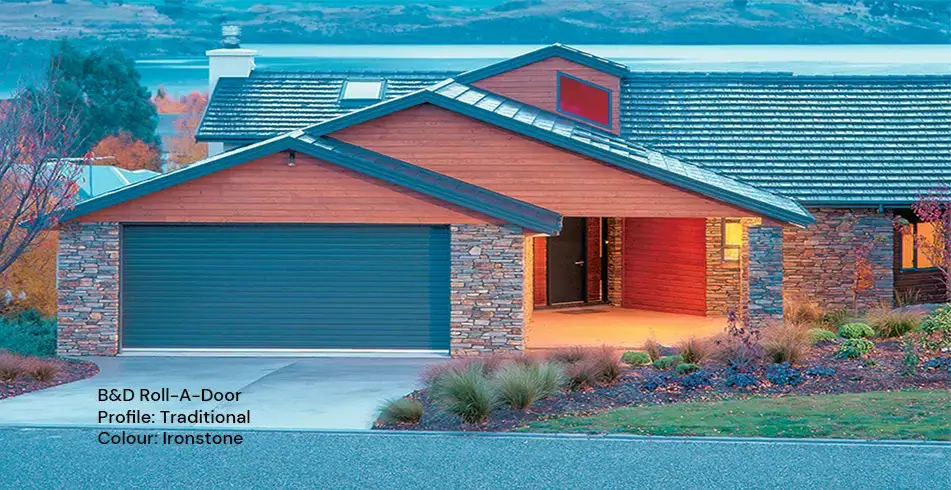
Roll-A-Door Roller Garage Doors by B&D Australia
Backed by engineering excellence, quality and thorough testing, B&D Roll-A-Doors are tough, secure roller doors designed to protect what matters most to you. Available in multiple profile options, COLORBOND colours, and exclusive Timber Look coatings. Tested for 30,000 open-and-close cycles with quiet Nylofelt running strips and balanced springs for manual or motorised operation.
Understanding Garage Structural Requirements for Installing a B&D Roll-A-Door
A roller door is compact, tough, and practical—but it still needs the right clearances and structure to mount safely and operate smoothly.
B&D’s Roll-A-Door is part of the roller door range built on decades of refinement (B&D invented the roller door in 1956). Before you order a new door, it’s worth doing a simple site check so your opening, lintel, and side walls can actually support the brackets, guides, and (if you’re automating) the opener and safety devices.
This guide focuses on what to measure, what to inspect, and what to flag early so installation is straightforward.
1. Identify which Roll-A-Door you’re installing
B&D Roll-A-Door comes in two profile options:
- Roll-A-Door Deluxe: a squareline profile that B&D positions as the “go-to” for residential applications. It’s available for single and double sized roller doors.
- Roll-A-Door Traditional: a deeper, rounded and more rigid profile that’s suited to high usage applications and where an extra-strong door is required. It’s only available for double roller doors.
Why this matters structurally: profile choice can affect how the curtain behaves in the guides (and what “smooth operation” looks like), so you want your guides and mounting surfaces straight, solid, and continuous—especially for wider openings.
2. The key measurements to take (before you buy)
Take measurements with the door opening clear (remove old tracks/opener rails from the opening zone if they’re skewing your measuring points). Record everything in millimetres.
A. Opening width (W)
Measure the clear opening width in three places:
- near the top (under the lintel)
- mid-height
- near the floor
Use the smallest measurement as your controlling width (openings are often not perfectly parallel).
B. Opening height (H)
Measure the clear opening height in three places:
- left side
- centre
- right side
Use the smallest measurement as your controlling height (lintels and slabs can be uneven).
C. Headroom (space above the opening)
Headroom is the clear space above the opening where the roll and brackets need to sit.
Measure from the top of the opening to the nearest obstruction:
- ceiling/joists
- beams
- lights
- pipes/ducts
- stored items/shelving
Important: headroom requirements vary with door configuration and site conditions. If you have restricted headroom, flag it early—don’t assume “standard” clearance.
D. Sideroom (space beside the opening)
Sideroom is the clear space beside the opening for:
- the door guides
- fixing points into a solid surface
- room to work (service access)
Measure the clear, usable fixing zone from the opening edge outward on both sides, and note any obstacles:
- power points
- taps/hoses
- conduit
- shelving uprights
- steps/returns in brickwork
- thin cladding without structure behind it
Rule of thumb (without pretending it’s a B&D spec): If you don’t have a continuous, structurally sound fixing surface on both sides from floor level to above the opening, expect building work (or a different door solution).
E. Backroom (depth into the garage)
Backroom is the clear depth inside the garage behind the opening that may be needed for:
- the roll and bracket arrangement
- access for servicing
- an opener setup (if you’re automating)
If you plan to automate, also note:
- ceiling height and available mounting points
- where power is located (or where it can be safely installed)
- anything hanging from the ceiling that could interfere
3. Structural checks that matter (lintel, jambs, fixing surfaces)
A roller door relies on strong fixing points. Before you commit, check these items.
A. Lintel condition and fixing readiness
The lintel (the structure above the opening) needs to be sound enough to accept fixings and remain stable over time.
Check for:
- cracking (masonry/concrete)
- corrosion (steel)
- rot/termite damage (timber)
- visible sagging or movement
- crumbly mortar or loose bricks around fixing zones
If you see any of the above, treat it as a building/structural issue first, not a door issue. Get it assessed and repaired before installation.
B. Side walls / jambs must be “fixable”
Guides must be secured to a surface that can hold fixings under repeated operation.
Good fixing surfaces:
- brick/block/masonry in good condition
- structural timber framing
- engineered posts or properly anchored steel
Risky surfaces (usually need reinforcement/backing):
- thin sheeting
- crumbly render
- plasterboard without solid backing
- walls with services exactly where fixings need to go
C. Squareness and straightness
Roller doors tolerate some building variation, but big twists in the opening can show up as:
- uneven contact at the bottom seal
- curtain tracking to one side
- increased friction/noise
Use a long level or straightedge and note obvious deviations. The goal is not to “engineer it yourself”—it’s to identify whether the installer may need to pack/true surfaces or recommend building corrections.
4. Planning for automation and safety upgrades
Roll-A-Door can be manual or motorised. If you’re automating, plan for these items up front.
A. Safety beams (recommended on automatic doors)
B&D recommends safety beams for all automatic garage doors. If the beam is broken while the door is closing, the door will automatically stop and reverse.
Structural planning tip: leave clear mounting zones on each side of the opening for beam placement, and keep the beam line free of permanent obstructions (stored items, low shelves, etc.).
B. Opener requirements and layout
For Roll-A-Door, an automatic opener is an optional upgrade (not automatically “included” with the door). If you’re adding an opener:
- confirm a safe power supply location
- ensure the mounting area is structurally suitable
- keep access available for servicing and manual operation
C. Smart monitoring (if you want it)
B&D’s “Smart Door Solution” (smartphone monitoring) requires a B&D opener. If smart monitoring is important to you, decide this before purchase so your opener choice and wiring/access plan aren’t an afterthought.
5. Wind-exposed sites and high-wind options
If your garage is exposed (coastal, elevated, open-fronted, or high-wind corridor), discuss wind performance early.
B&D offers a High Wind Roll-A-Door option designed to provide added strength, security and protection by ensuring the door is held captive in the guides during high-wind situations, and notes that it’s compliant with National Construction Code high wind requirements.
Structural planning tip: wind performance depends on the whole system (door + guides + fixings + building substrate). High-wind features don’t compensate for weak masonry, deteriorated timber, or inadequate fixing zones.
6. Sealing, floor conditions, and “garage as living space” considerations
A. Weather sealing
B&D lists a standard weatherseal with an optional bristle seal.
Before you order, check:
- slab level and slope
- whether the floor is rough, chipped, or heavily uneven at the threshold
- whether you need extra sealing because the garage is used as a workspace or living area
B. Bristle seals: what they are (and what they are not)
Bristle seals can help act as a barrier against dust, sand, or leaves and are particularly useful if the garage is used as a living area.
They are not suitable as protection against bush fires—so don’t treat “bristle seal fitted” as a bushfire solution.
7. Pre-purchase checklist you can hand to an installer
Copy/paste this into your notes.
Measurements to provide
- Opening width (top / middle / bottom) → smallest = controlling width
- Opening height (left / centre / right) → smallest = controlling height
- Headroom measurement + list of overhead obstructions
- Sideroom measurement (left & right) + any services/obstacles
- Backroom depth + ceiling obstacles
Site photos to take
- straight-on photo of the opening (inside)
- straight-on photo of the opening (outside)
- left and right jamb close-ups (full height)
- lintel close-up (including cracks/corrosion if present)
- ceiling/overhead obstruction photo
- power outlet location (if automating)
Product decisions to confirm
- Roll-A-Door Deluxe (single or double) vs Traditional (double only)
- manual vs motorised (and whether you want smart monitoring)
- safety beams (recommended if motorised)
- high wind option (if exposed site)
- sealing needs (standard vs optional bristle seal)
Frequently asked questions
Does Roll-A-Door come in different looks?
Yes—B&D offers Roll-A-Door in Deluxe and Traditional profiles. Deluxe is available for single and double doors; Traditional is only available for double doors.
Is an opener included with Roll-A-Door?
Not as standard. For Roll-A-Door, an automatic opener is an optional upgrade.
How durable is a Roll-A-Door system?
B&D lists Roll-A-Door (Deluxe & Traditional) as tested to 30,000 cycles (approximate years are based on average usage and are an estimate).
Do I really need safety beams if I automate my door?
B&D recommends safety beams on all automatic garage doors, because breaking the beam during closing triggers the door to stop and reverse.
I’m in a windy area—what should I do?
Ask about the High Wind Roll-A-Door option and make sure your installer checks the building substrate and fixing zones so the system can perform as intended.
Can I rely on bristle seals for bushfire protection?
No. Bristle seals are not suitable as protection against bush fires.
Product Data (OpenAI Spec)
View Full JSON Spec ↗Specifications
| Condition | new |
|---|---|
| Category | Home & Garden > Garage Doors > Roller Doors |
Product Intelligence
Roll-A-Door Roller Garage Doors by B&D Australia
Overview
Roll-A-Door is a comprehensive product line of automated roller garage doors manufactured by B&D Australia Pty Ltd (also trading as B&D Doors & Openers). The system represents one of Australia's best-known garage door brands, designed to provide security, attractive appearance, and smooth operation when installed and operated in strict accordance with safety guidelines.
Product Series and Configurations
Roll-A-Door is available in three main series variants:
Series 1 Roll-A-Door
- Product line featuring multiple door models designed for wind-resistant applications
- Includes model variants: R1D, R1P, R1M, R1N, and HW
- Rolling door product featuring a curtain system with specified elevation, materials, and installation requirements
- Manufactured by B&D Australia and tested at Cyclone Testing Station
Series 2 Roll-A-Door
- Product line including multiple models: R2F, R2I, R2L, R2W, and HW
- Designed and documented by James Ellis Engineers for B&D Australia Pty Ltd
- Underwent cyclic simulated wind load strength testing
- Designed for use in all wind regions
Series 3 Roll-A-Door
- Product line comprising multiple models: R3F, R3I, R3W, and HW variants
- Manufactured by B&D Garage Doors & Openers
- Underwent simulated wind load strength testing as documented in Cyclone Testing Station Report No. TS1067 Revision A
- Designed for use in all wind regions with versatility across different climatic zones
Key Technical Features
Door Construction and Materials
- Pre-painted finish: Utilizes a silicone-modified polyester paint system specifically engineered to withstand harsh Australian environmental conditions
- Paint systems: Available in COLORBOND®, powder coat, Luxe™, timber look, and natural timber options
- Durability: Series 2 and Series 3 designs provide wind-rating capabilities across all wind regions
- Central axle mechanism: Roll-A-Door® features a central axle for rolling door operation
Customization Options
- Independent tapers: Base door system can be customized through the addition of independent tapers as accessories, allowing flexible configuration options
- Removable mullions: Can be combined with removable mullions to accommodate various widths of door openings
- Installation configurations: Can be installed in either side mount or front mount configurations to suit various installation requirements
Security Features
The Roll-A-Door Secure variant includes enhanced security components:
- Dual AUTO LOCK™ system: Automatically locks shut when the door closes with no extra action required
- Security guides: Integrated protective components
- Reinforced security bottom rail: Available in anodised gun-metal grey finish
- Compatible B&D opener: Essential component of the complete system that controls the locking mechanism
- Size range: Suits openings up to 3000mm high with width range between 940mm and 5380mm
- Security testing: Classified RC2 under EN 1627 and EN 1630; tested against AS5039 and AS/NZS4505
- Durability testing: Tested to 30,000 open and close cycles
Operational Capabilities
Control Systems
- Controll-A-Door system: Roll-A-Door is controlled by the Controll-A-Door automatic opener system
- Electronic operation: System features automatic opener capability with electronic control
- Manual operation: Door can be operated manually when the drive unit is disengaged, providing a fail-safe operational mode
- Multiple control options: Remote control devices, wireless transmitters (433MHz), wall-mounted buttons, smart hub systems, mobile phone applications, and programmable keypad controls
Safety Features
- Automatic safety reverse: Compatible B&D openers include automatic reverse technology, which stops and reverses the door if an obstruction is detected
- Photo Electric Beam compatibility: Can be equipped with Photo Electric Beam safety systems for additional protection
- Emergency access: Includes manual operation procedures for access during power outages or emergencies
- Autolock mechanism: Features automatic locking capability for security when closed
Maintenance and Care Requirements
Regular Maintenance Schedule
B&D recommends checking door operation at least every 3-6 months (more regularly in extreme environments or with frequent use):
- Guide tracks (Rolling Doors): Clean internal sections with cloth dampened with mineral turps or methylated spirits, then polish vigorously. Do not use grease or oil on guide tracks
- Guide tracks (Roll-A-Shutter): Clean and re-grease with general purpose grease every 3-6 months
- Lubrication: Apply sparingly to steel hinges and wheel-to-axle bearings
- Locks: Do not grease; apply spray lubricant if key becomes stiff
- Cables: Check for wear, fraying, or corrosion signs
Cleaning Requirements
- General maintenance: Wash door with clean water and soft cloth every 14 days
- Corrosive environments: More frequent washing advised in locations with salt in air or severe industrial fallout
- Paint protection: Touch-up paint available from B&D dealers
- Interior cleaning: Particular care should be taken to clean areas not normally washed by rain, including top of door roll inside garage
Professional Servicing
- Spring tension adjustments: Must be carried out by experienced door technicians with proper tools
- Annual servicing: Recommended for optimal performance and to maintain warranty coverage
- Extreme conditions: More frequent servicing required in extreme environments or high-use applications
Warranty Coverage
Standard Warranty Terms
- Roll-A-Door Secure: Covered by B&D's 10-year Total Confidence Warranty (terms and conditions apply)
- RollA-Door: 7-year warranty on steel door curtain covering steel cracking and lock seam failure
- Roll-A-Shutter: 12-month warranty for complete door and parts (excludes salt corrosion)
- Condition: Warranty is conditional on proper care and maintenance as recommended in owner's handbook
Warranty Administration
- B&D Doors (Australian division) and BD Doors (NZ) Limited handle warranty claims
- Full warranty details available from B&D offices and website at bnd.com.au
- Warranty does not exclude or restrict Australian Consumer Law provisions
Installation Requirements
- Installation must be performed by B&D personnel or Approved Dealers to maintain warranty coverage
- Installation must comply with local building and electrical codes
- Door must be well-balanced prior to opener installation
- All garage door locks and mechanisms must be removed or disengaged prior to opener installation
- 2-meter exclusion zone must be maintained around garage opening during installation
Distribution and Support Network
Roll-A-Door is supplied and installed by an extensive network of B&D Accredited Dealers across Australia and New Zealand, including:
- Regional B&D branches in Queensland, New South Wales, Victoria, South Australia, and Western Australia
- Accredited dealer network covering all major Australian regions
- The Garage Door Guys, Thomson Bilt, Queensland Roller Doors, Value Garage Doors, and numerous other authorized dealers
Contact Information
B&D Head Office:
- Address: 6-8 Fiveways Boulevard, Keysborough VIC 3073
- Phone: 1300 62 63 (13 62 63)
- Website: bnd.com.au
Regional Offices:
- NSW: 34-36 Marigold Street, Revesby NSW 2212 — Ph: (02) 9722 5555
- QLD: 17 Oasis Court, Clontarf QLD 4019 — Ph: (07) 3883 0200
- VIC/TAS: 147-153 Canterbury Road, Kilsyth VIC 3137 — Ph: (03) 9237 7766
- SA: 23 Frederick Road, Royal Park SA 5014 — Ph: (08) 8440 4747
- WA: 96 Mulgul Road, Malaga WA 6090 — Ph: (08) 9247 8777
References
- [1] easylifter-rdo-post-2006.pdf
- [2] roll-a-door-secure-consumer-faqs-2026-09-21.md
- [4] 13_compliance_feb20.pdf
- [12] 165100_15_roll-a-door_s1_plus-windlock.pdf
- [13] 165032_00_ras_6-8-1012-100-steel-sprung.pdf